Efficient Visual Perception and Understanding
Description: With the rapid advancement of deep learning, vision foundation models, and multimodal perception, visual systems are evolving from merely "seeing clearly" to "seeing efficiently, accurately, and meaningfully." This special session focuses on efficient visual perception and understanding under complex real-world conditions, covering key topics such as lightweight model design, efficient representation learning, video and 3D perception, cross-modal fusion, open-world recognition, edge deployment, and trustworthy robust vision. It aims to bridge theoretical innovation and practical application, exploring how to build visual intelligent systems that achieve high accuracy, strong generalization, and low resource consumption under real-time and constrained-computation scenarios, with applications in autonomous driving, robotics, smart manufacturing, low-altitude perception, and urban vision.
Session organizers
Prof. Guangwei Gao, Nanjing University of Science and Technology, China
Prof. Jian Zhang, Jiangsu Ocean University, China
Assoc. Prof. Heyou Chang, Nanjing Xiaozhuang University, China
The topics of interest include, but are not limited to:
1. Lightweight Vision Models and Efficient Inference
2. Efficient Visual Representation Learning and Self-Supervised Pre-training
3. Video Understanding and Spatio-Temporal Perception
4. 3D Vision and Scene Understanding
5. Multimodal Fusion and Cross-Modal Understanding
6. Edge Vision and Trustworthy Robust Perception
Submission method
Submit your Full Paper (no less than 5 pages with two colums) or your paper abstract-without publication (200-400 words) via Online Submission System, then choose Special Session 4 (Efficient Visual Perception and Understanding)
Introduction of Session organizers
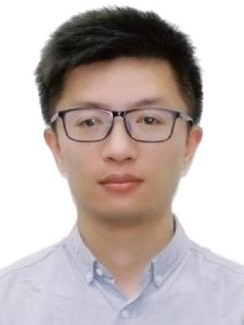 |
Prof. Guangwei Gao
Nanjing University of Science and Technology, China
Gao Guangwei is a Professor and Ph.D. supervisor at the School of Computer Science and Engineering / School of Artificial Intelligence / School of Software at Nanjing University of Science and Technology. His research focuses on efficient intelligent visual perception and understanding. He has led or participated in numerous research projects, including those funded by the National Natural Science Foundation of China, the Natural Science Foundation of Jiangsu Province, and the "New Generation Artificial Intelligence" major project under the "Science and Technology Innovation 2030" initiative. He has published over 100 papers in prestigious international journals-such as IEEE-TPAMI, TIP, TMM, and IJCV-and at top-tier international conferences, including CVPR and ACM MM; seven of these are recognized as ESI Highly Cited Papers. He is a recipient of the "Six Talent Peaks" high-level talent designation in Jiangsu Province and a co-recipient (7th of 11) of the First Prize of the Jiangsu Province Science and Technology Award. Furthermore, he was included in the 2025/2026 list of the world's top 2% scientists, published by Stanford University. He is a Senior Member of IEEE, CCF, CSIG, CAAI, and CAA; serves on the editorial boards of the renowned international journals Pattern Recognition (CCF-B) and IEEE Transactions on Image Processing (CCF-A); is a member of the Youth Working Committee of the China Society of Image and Graphics (CSIG); serves as a standing committee member of the Pattern Recognition Professional Committee of the Jiangsu Association for Artificial Intelligence; and acts as a Senior Area Chair (AC) for VALSE.
|
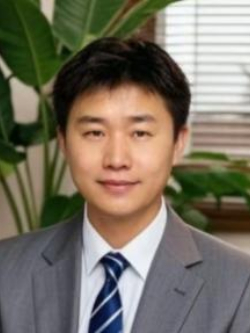 |
Prof. Jian Zhang
Jiangsu Ocean University, China
Zhang Jian is a professor and master's supervisor at the School of Computer Engineering, Jiangsu Ocean University. He was selected for the Lianyungang "521" Talent Project and the "Huaguoshan Talents" development program in 2017, and received funding under the Lianyungang "Haiyan Plan" in 2018. In 2020, he was named a Jiangsu Province "Innovation and Entrepreneurship Talent." He serves as a standing committee member of the Pattern Recognition Professional Committee of the Jiangsu Association for Artificial Intelligence and is a key member of an "Excellent Teaching Team" under the Jiangsu Provincial "Qinglan Project." He was a visiting researcher at The Hong Kong Polytechnic University from 2016 to 2017. His work has been recognized with a second-prize award for Scientific and Technological Progress from the China Instrument and Control Society, a third-prize award for Scientific Research Achievements in Jiangsu Higher Education Institutions, and an award for Outstanding Academic Achievements in Natural Science from Lianyungang City. His research primarily focuses on image processing, pattern recognition, machine learning, computer vision, and big data analysis. He possesses extensive project experience in vision-based automated inspection and has achieved significant research outcomes, including the publication of over 60 academic papers.
|
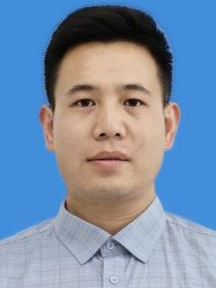 |
Assoc. Prof. Heyou Chang
Nanjing Xiaozhuang University, China
Heyou Chang is an Associate Professor, Doctoral Supervisor, and Assistant Dean of the School of Information Engineering, Nanjing Xiaozhuang University. He received his doctoral degree in Pattern Recognition and Intelligent Systems from Nanjing University of Science and Technology in 2017. His research interests mainly include computer vision and medical image analysis. |